
Fibroblast Treatment: What It Is, Healing Time, and Why Pigmentation Can Get Darker

By RoxyK – Lentils and Lace
Fibroblast treatment, often called plasma fibroblast therapy or plasma skin tightening, is a non-surgical cosmetic procedure designed to improve the appearance of loose skin, fine lines, wrinkles and, in some cases, acne scars. It is often marketed as an alternative to surgical procedures such as a facelift or eyelid surgery. However, it is important to understand that fibroblast is still a skin-injury procedure, and the results and risks can vary considerably depending on the device, treatment intensity, skin type and experience of the practitioner.
What exactly is fibroblast?
Fibroblast treatments use a device that generates a small electrical/plasma arc between the device tip and the skin. The arc creates tiny, controlled areas of thermal injury on the surface of the skin. These are sometimes called micro-injuries or plasma dots.
The intention is to stimulate the skin’s natural healing response. During healing, the body produces collagen and other structural proteins, which can gradually make the treated area appear firmer and smoother.
The procedure is usually performed after the skin has been cleansed and a topical anaesthetic has been applied. The practitioner then moves the device over the treatment area, creating a pattern of tiny dots. Depending on the area being treated, the procedure can take anywhere from 30 minutes to a couple of hours.
Although it is described as “non-surgical,” fibroblast should not be confused with a completely non-invasive facial. The treatment deliberately creates thermal injury to the skin, so appropriate aftercare is extremely important.
What is the healing process like?
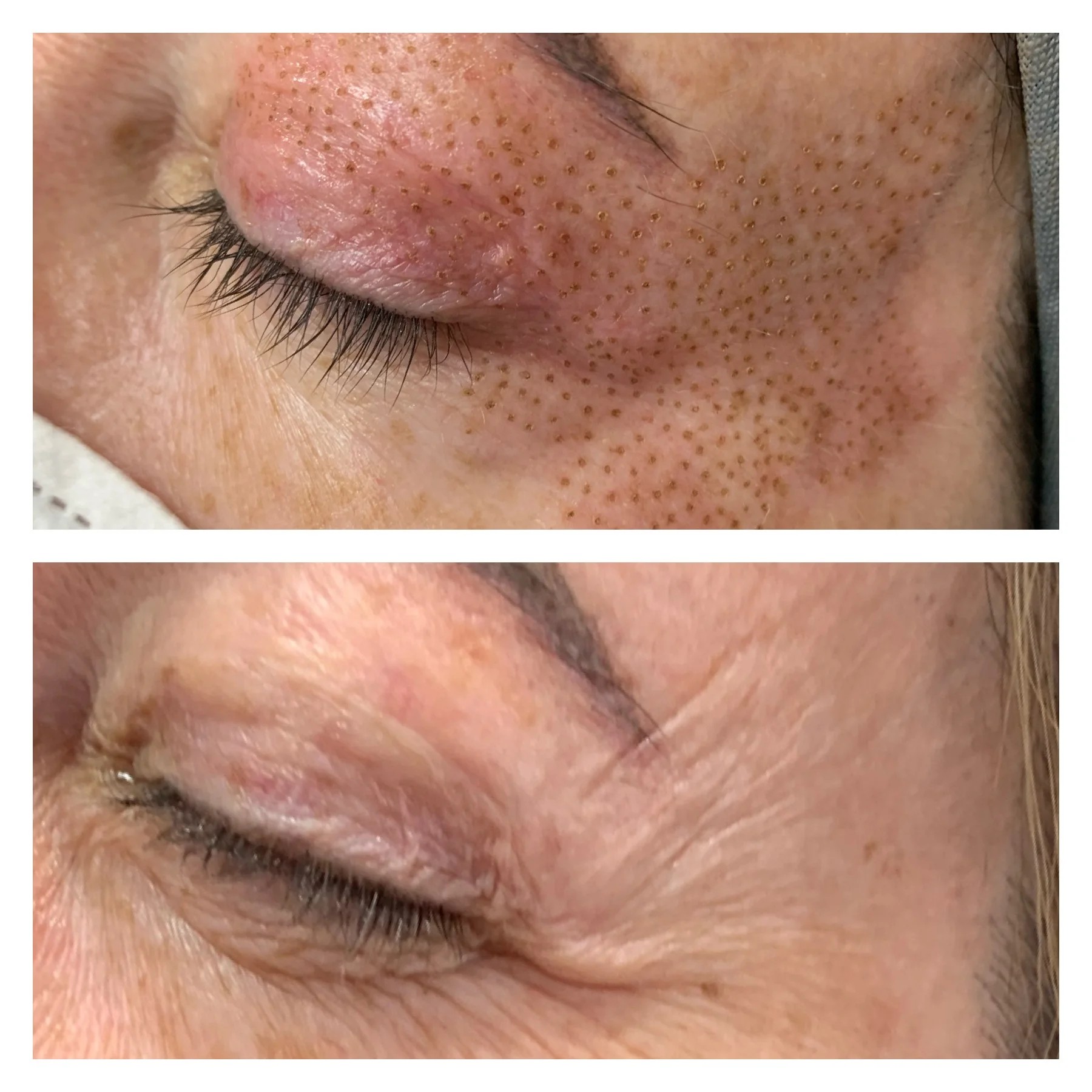
Immediately after treatment, the skin will generally appear red, swollen and irritated. Small brown or dark dots form where the plasma arc contacted the skin. These dots are essentially tiny areas of controlled injury and scabbing.
Swelling can be particularly noticeable around the eyes if the eyelids or surrounding area have been treated. It commonly becomes more noticeable during the first few days before gradually settling.
The small scabs generally remain for approximately 5–10 days, although healing varies between individuals and treatment areas. They should be allowed to fall off naturally rather than being picked or scratched.
Once the scabs have disappeared, the new skin underneath may initially look pink, red, darker or uneven in colour. This does not necessarily mean that the final result has been reached. The skin continues to remodel after the visible healing has finished, and collagen production can continue for several weeks to months.
During this period, gentle skincare and, particularly, diligent sun protection are extremely important.
Why can pigmentation become darker?
One of the most important potential complications of fibroblast is post-inflammatory hyperpigmentation (PIH). This is when an area of skin becomes darker after inflammation or injury.
When the skin is injured, inflammation triggers biological processes that can stimulate melanocytes—the cells responsible for producing melanin. In some people, these cells become particularly active, producing additional pigment as the skin heals.
This can leave brown, greyish or darker patches in the treated area.
The risk isn’t identical for everyone. People whose skin naturally contains more melanin, including many individuals with medium-to-deep skin tones, can be more prone to post-inflammatory pigmentation. However, lighter skin can also develop PIH.
There is another important factor: sun exposure. Ultraviolet radiation can stimulate melanin production and make existing post-inflammatory pigmentation considerably darker. Even relatively small amounts of sun exposure during the healing period may prolong pigmentation.
Heat and ongoing inflammation may also contribute. If the skin remains irritated because of aggressive skincare products, excessive exfoliation, picking at scabs or inadequate aftercare, pigmentation can potentially become more pronounced.
How long does the pigmentation last?
Unfortunately, there isn’t one guaranteed timeframe. Mild pigmentation may gradually fade over weeks to several months, while more persistent pigmentation can last considerably longer.
This is why prevention is often more important than trying to correct pigmentation afterward. Before undergoing fibroblast, discuss your skin type, history of pigmentation, previous reactions to cosmetic procedures and the specific device being used with a qualified medical professional.
After treatment, follow the practitioner’s aftercare instructions carefully, avoid picking the treated areas, minimise sun exposure and use an appropriate broad-spectrum SPF 30–50 once your practitioner says sunscreen can safely be applied.
If pigmentation continues to intensify, becomes unusually painful, develops blistering, or does not appear to be healing normally, seek assessment from a dermatologist or qualified healthcare professional rather than trying increasingly strong bleaching or exfoliating products yourself.
In short: fibroblast works by deliberately creating controlled thermal injury to encourage skin remodelling. The visible recovery commonly takes around one to two weeks, but deeper healing and collagen remodelling take much longer. Darkening after treatment can occur because the inflammation and injury stimulate melanin production, particularly in people prone to post-inflammatory hyperpigmentation. Proper patient selection, conservative treatment, experienced practitioners and meticulous sun protection can all help reduce the risk.