






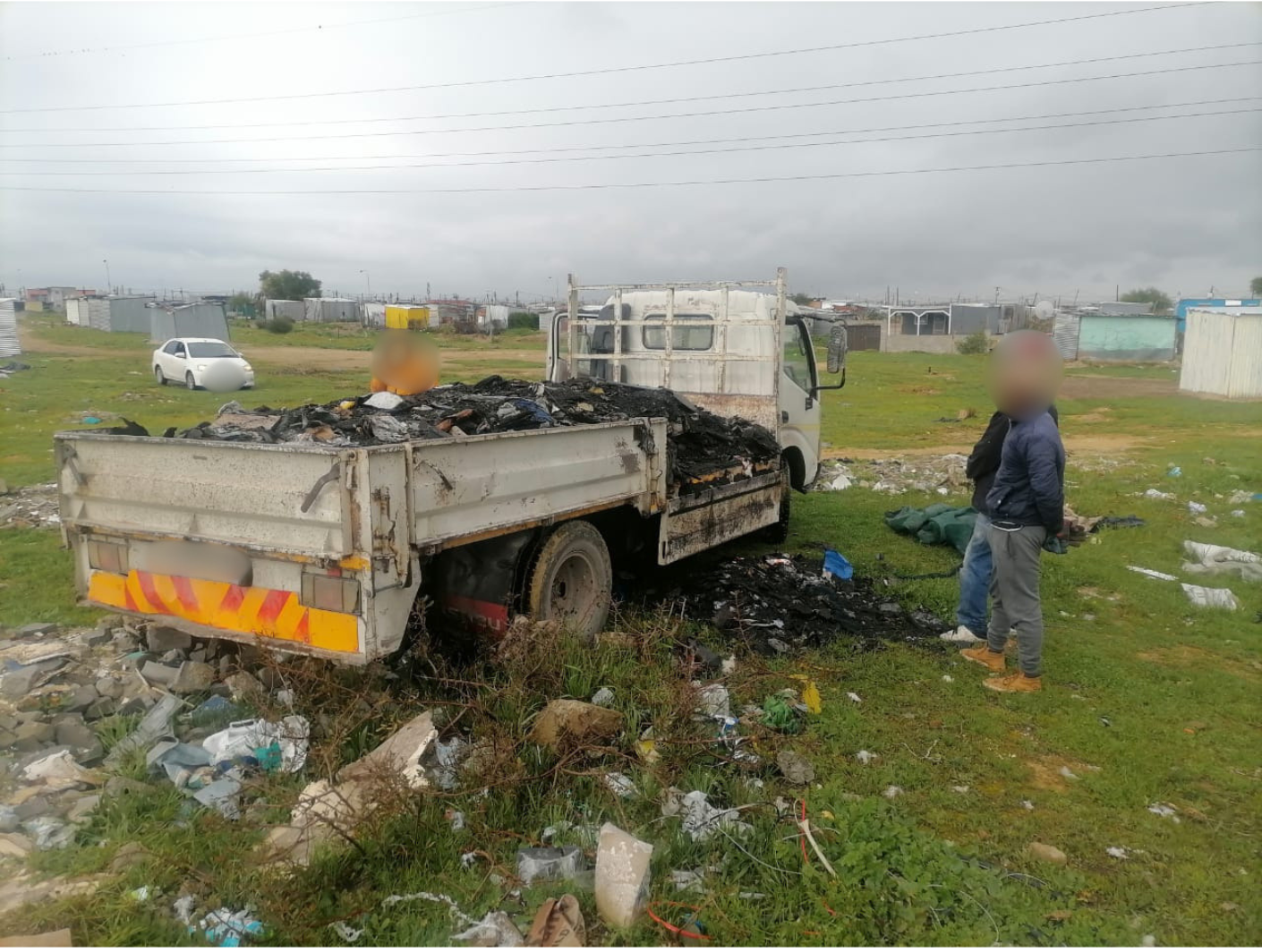
The City of Cape Town has significantly stepped up its fight against illegal dumping, with the number of vehicles impounded for waste-related offences soaring by 133% over the past year.
According to the City, Law Enforcement officers impounded 247 vehicles used for illegal dumping during the last 12 months, compared to 106 vehicles during the previous year. The sharp increase reflects both stronger enforcement efforts and the growing challenge of illegal dumping across the metro.
Nearly 60% of all vehicle impoundments were recorded in the eastern parts of Cape Town. Identified hotspots include Old Faure Road and Mew Way, Driftsands; Old Faure Road and Eersteriver Way in Mfuleni; Blueberry Hill between Eerste River and Blue Downs; Baden Powell Drive and Swartklip Road in Khayelitsha; Macassar Road in Macassar; Broadlands Road in Strand; and Onverwacht Road in Somerset West.
Other problem areas across the city include the Atlantis Industrial Area, Duinefontein Road in Dunoon, Eisleben Road in Elsies River, Kalkfontein, Kuils River, Muizenberg, Old Lansdowne Road in Parkwood, Philippi East, Retreat, Strandfontein Road, Swartklip Road, Vrygrond, Wallacedene, Wesbank and Wynberg.
The City’s enforcement statistics also show a sharp rise in fines issued under the Integrated Waste By-law. During the same period, fines increased from 20,356 to 35,173, representing a 73% year-on-year increase.
Mayoral Committee Member for Safety and Security, Alderman JP Smith, said the results demonstrate the commitment of enforcement teams monitoring known dumping hotspots, but also highlight a worrying trend linked to unlawful land occupations.
He said that while some offenders dump waste out of convenience or because they ignore the availability of legal waste drop-off facilities, there is an increasing number of incidents involving large quantities of building rubble being deposited at pre-selected locations. According to Smith, the rubble is often used to level land before informal structures are erected.
Smith described illegal land occupation as one of Cape Town’s most significant challenges and expressed hope that the ongoing review of the Prevention of Illegal Eviction from and Unlawful Occupation of Land Act will create a better balance between protecting the rights of lawful residents, communities and families waiting for housing, while also holding accountable those who organise or profit from illegal land invasions.
Residents who witness illegal dumping are encouraged to report incidents immediately. Reports should include the location, time of the incident, a description of the vehicle involved and, where possible, photographic evidence to assist investigators. The City also encourages residents to submit anonymous tip-offs, with rewards available for qualifying information that leads to successful enforcement action.
Illegal dumping carries a fine of R2,500. Vehicles impounded for a first offence are subject to a release fee of R8,700. A second impoundment increases the release fee to R11,700, while a third offence attracts a release fee of R17,400.