
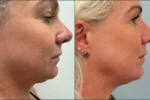






By RoxyK – Lentils and Lace
High-Intensity Focused Ultrasound (HIFU) is a non-surgical cosmetic treatment designed to tighten and lift the skin by stimulating the body’s natural collagen production. It has become a popular alternative for people who want to improve skin firmness and reduce the signs of aging without undergoing surgery or requiring significant recovery time. HIFU is commonly used on the face, neck, jawline, and décolletage, although some devices are also approved for use on the body.
Unlike lasers or radiofrequency treatments, HIFU uses focused ultrasound energy that penetrates deep beneath the skin’s surface. The energy reaches specific layers of tissue, including the superficial muscular aponeurotic system (SMAS), the same layer that surgeons target during a surgical facelift. Because the ultrasound bypasses the outer layers of the skin, there is usually little to no damage to the skin surface, resulting in minimal downtime.
During the procedure, a handheld device delivers focused ultrasound waves into the targeted tissue. These waves generate small, controlled points of heat, typically reaching temperatures of around 60–70°C. This controlled thermal injury triggers the body’s natural wound-healing response, stimulating fibroblasts to produce new collagen and elastin. Collagen is the protein responsible for maintaining the skin’s firmness and elasticity, while elastin helps the skin return to its original shape after stretching.
The treatment itself usually takes between 30 and 90 minutes, depending on the area being treated. Most people can resume normal daily activities immediately afterward. Some individuals experience mild redness, swelling, tenderness, or tingling, but these effects generally resolve within a few hours or days.
The effectiveness of HIFU depends largely on the individual’s age, skin quality, degree of skin laxity, and expectations. HIFU works best for people with mild to moderate skin sagging rather than severe loose skin. It is generally considered most effective for individuals between their late 30s and early 60s who have begun noticing reduced skin firmness but are not yet ready for surgery.
Clinical studies have shown that HIFU can produce measurable improvements in skin tightening and lifting. Many patients begin noticing subtle changes after four to six weeks, with the most significant improvements appearing after two to six months as new collagen continues to develop. The results are gradual rather than immediate, giving the skin a more natural-looking improvement.
Research suggests that HIFU can improve skin elasticity, reduce the appearance of jowls, lift the eyebrows, define the jawline, and decrease fine lines and wrinkles. However, the degree of improvement is generally modest. Most experts estimate that HIFU produces approximately 20–30% of the lifting effect that can be achieved with a surgical facelift. For this reason, it is best viewed as a maintenance or early intervention treatment rather than a replacement for surgery in people with advanced skin laxity.
Results typically last between 12 and 18 months, although this varies depending on age, genetics, lifestyle, sun exposure, smoking, and overall skin health. Many practitioners recommend maintenance treatments every 12 to 18 months to preserve collagen production and maintain results.
While HIFU is generally considered safe when performed by a qualified and experienced practitioner, there are some limitations and risks. Temporary discomfort during treatment is common, and some people experience bruising, numbness, or swelling. Rare complications include burns, nerve irritation, or uneven results, particularly if the procedure is performed incorrectly or with inappropriate settings. Choosing a well-trained provider who uses an approved medical-grade device significantly reduces these risks.
It is also important to understand what HIFU cannot do. It does not remove excess skin, significantly improve deep wrinkles, replace lost facial volume, or treat severe sun damage. Individuals with substantial sagging may achieve better outcomes with surgical procedures or by combining HIFU with treatments such as injectable fillers, biostimulators, skin resurfacing, or medical-grade skincare.
Overall, HIFU is an effective, evidence-based treatment for improving mild to moderate skin laxity by stimulating natural collagen production. It offers a non-invasive option with minimal downtime and gradual, natural-looking results. If your goal is to subtly restore skin firmness, improve facial contours, and delay more invasive procedures, HIFU can be an excellent choice. However, realistic expectations are essential. It provides noticeable improvement rather than dramatic transformation, and the best results are achieved when combined with good skincare, daily sunscreen use, a healthy lifestyle, and ongoing maintenance treatments.